George Catlin was born in Wilkes-Barre, Pennsylvania in 1796. Fascinated by Native Americans since a child, Catlin ended his career as an attorney to accompany General William Clark on an expedition up the Mississippi river into Native American territory. Over the course of 6 years Catlin visited over 50 tribes and produced over 500 paintings. George Catlin was very respectful towards Native American Culture. Through these works Catlin reveals his perspective on Native Americans:
The Last Race, Mandan O-kee-pa Ceremony:
 |
This painting depicts the O-kee-pa Ceremony celebrated by the Mandan tribe. The ceremony represents the transformation from adolescence into manhood.

White Cloud, Head Chief of the Iowas:
The painting is of White Cloud wearing his chief outfit with face and body paint.

Commanding General a Boy:
The painting is of a boy in warrior clothing who will become the commanding general.

Teepee of the Crow Tribe:
The painting is of a Teepee made by a person of the Crow Tribe with an Indian inside. The Teepee has markings of Crow Tribe life on it.
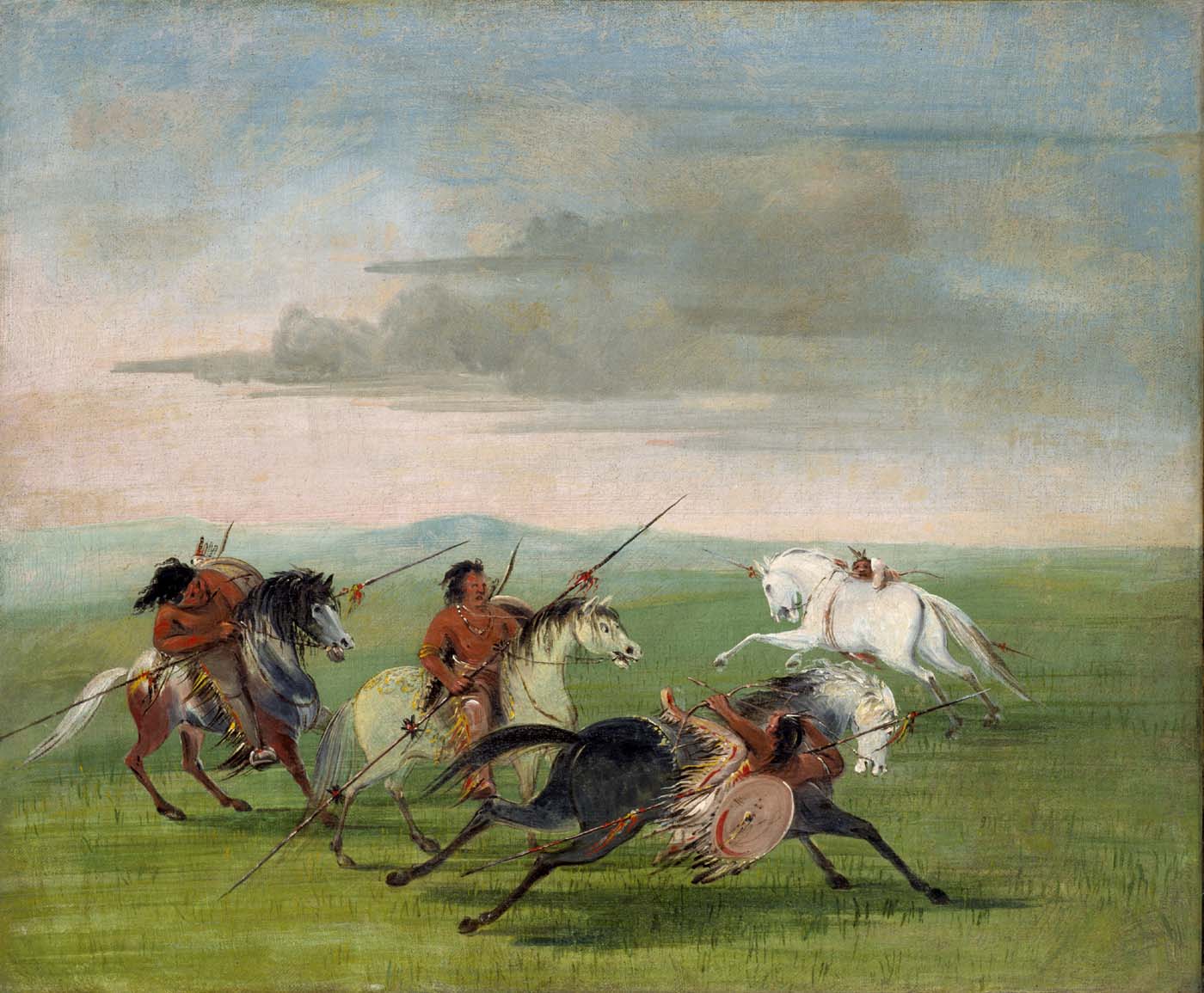
Comanche Feats of Horsemanship:
This painting is of a people fighting on a plain that Catlin considers the best of all the plains. He shows them using a horse as a shield while firing at the enemies.
Catlin reveals the Natives in their natural state with no intrusions of the white people. With his explicit designs, Catlin captures important moments of Native American culture and history. He shows their actual lifestyle, and not the savage they are said to be.

No comments:
Post a Comment